

Working Creatives Need More Than Productivity Right Now
How freelancers and creators can stay mentally viable during slow periods, unstable markets, and unwanted downtime

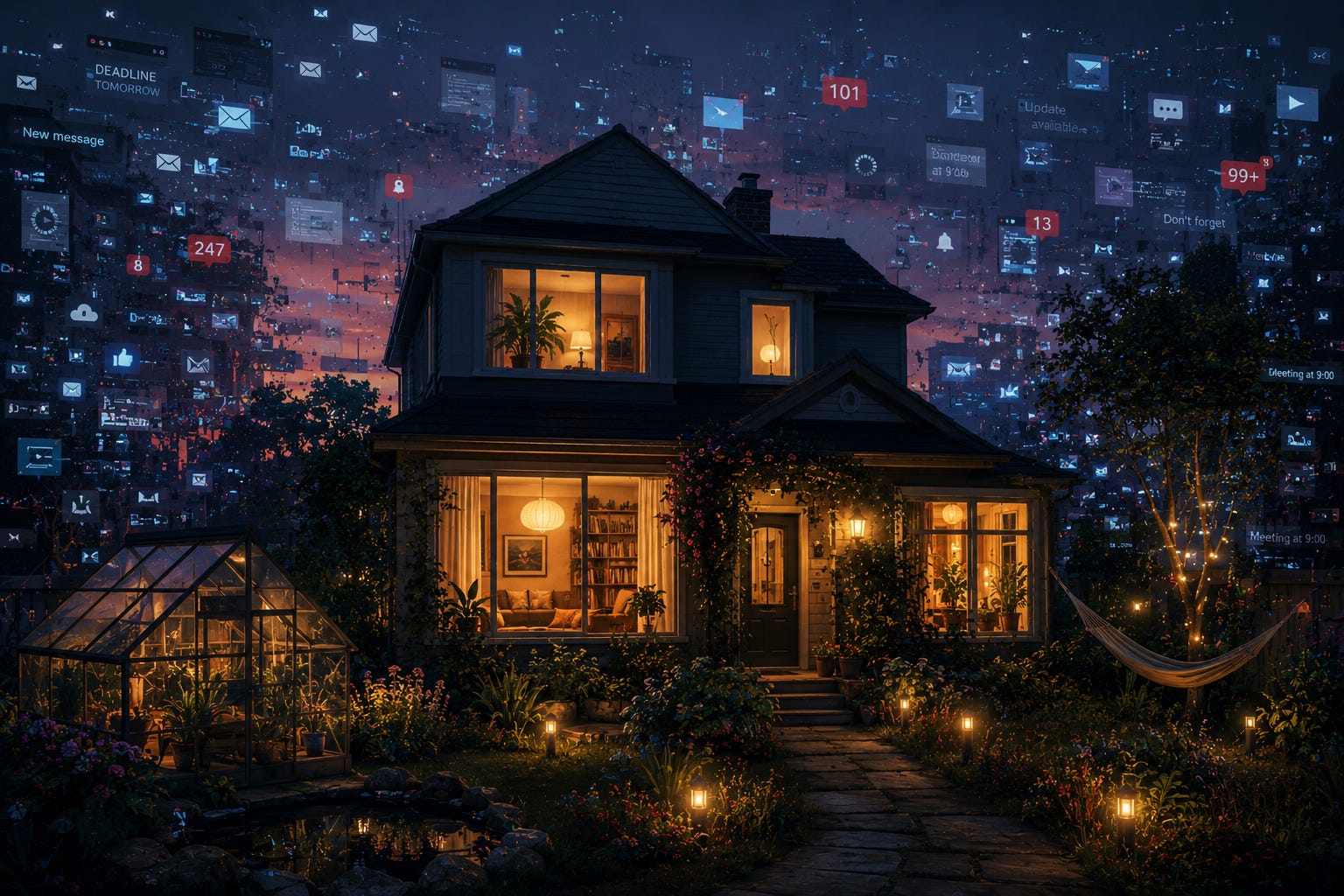
So, like most freelancers, I get that creative work (especially freelance creative work) involves periods of instability pretty much by definition. But I don’t think I’m alone in feeling like the current landscape extra sucks.
For the most part, everything’s been super unreliable, even for those of us with established businesses and client rosters.
Some weeks, my inbox is packed, and I’m almost too busy, but others find me with way more free time on my hands than I’m comfortable with. Some projects go on for a while only to evaporate later, while others fail to materialize at all. Clients pause projects, and of course, entire industries are suddenly deciding they only need “light AI polishing” instead of actual writers.
All that has added up to multiple intermittent stretches of unwanted downtime lately — frustrating to say the very least.
Usually, I really like downtime, and I’ve been through many periods (some not that long ago) when I felt like I didn’t have nearly enough of it. But I’ve also discovered that I’m not particularly great with it when I’ve got too much of a good thing on my hands.
By that, I mean I’m apparently “that guy (or gal)” who defaults to doomscrolling and self-shaming if I’m not careful. And the solution always feels like it’s to scrounge for ways to make the rest of my life “productive” somehow, so I wind up incessantly asking myself questions like:
Should I turn this walk into content somehow?
Is this cool new hobby I’ve discovered something I can monetize?
Should I be learning six new professional skills right now?
Would a more disciplined person already have launched a course?
And it’s not like I’m pulling those out of my ass or anything, especially considering I’ve never been what I’d call a natural workhorse.
Modern productivity culture has convinced so many creative people that every moment must either generate money, build visibility, or otherwise support future earning potential. Especially when money’s tight or work is slow. But unfortunately, creativity has more in common with an actual living ecosystem than it does with a software platform.
As creative people, we need more than productivity (attempted or otherwise) during unstable periods. We also need ways to stay mentally and creatively engaged, regardless of what the external landscape might be doing at the time.
Creativity Runs on More Than Just Work
I’m still seeing way too many hustle influencers talking about creativity as though it emerges directly from discipline alone. Discipline certainly counts for a lot, but so do skill-building and even simply showing up in the first place.
And all creativity needs fuel. Writers, artists, filmmakers, musicians, and other creative people absorb enormous amounts of material from ordinary life. Think examples like:
Rambling conversations
Weather and seasonal rhythms
Random memories
Music and books
Off-the-cuff observations
Recurring fascinations
Everyday sensory experiences
I like to remind myself that fruitful, creative lives once included a lot of activities modern productivity culture dismisses as inefficient. Think long walks, afternoons spent wandering bookstores, writing (or reading) letters, hanging out in cafés, gardening, and accumulating odd little interests for no obvious reason.
Those experiences weren’t distractions from creative work. They actually formed part of the very machinery producing it.
But right now, I also see a lot of freelancers and creatives cutting themselves off from all of those things during slow periods, and not always for financial reasons. They stay indoors, refreshing inboxes, and stop noticing seasonal changes because their attention narrows entirely toward survival and uncertainty.
That response makes sense emotionally, but it also slowly starves the creative mind. After all, you can only revamp your resume and update your freelance profiles so many times.
How to Use Unwanted Downtime Without Spiritually Turning into Office Furniture
Slow periods feel much more survivable when you stop treating them exclusively as professional emergencies and start treating them partly as maintenance periods for your larger creative system.
Now, that doesn’t mean pretending financial pressure isn’t real, because I think we all know it is. But it’s important to recognize that preserving mental vitality is just as essential.
Recalibrate your attention span
If you’re anything like me, then modern freelance instability often feels nearly impossible to navigate without collapsing into a soup of tears and anxiety. My personal fallbacks when I’m in the throes of a panic episode include compulsively checking email, dashboards, notifications, and analytics throughout the day, searching for any signs whatsoever that things are taking at least a temporary turn for the better.
It rarely does anything to make me feel better, but the constant scanning leaves my brain feeling jittery and unfocused, regardless.
One of the better things I’ve learned to do during unstable periods involves deliberately reintroducing forms of uninterrupted attention into my daily routines:
Long walks or gardening stints, sometimes sans music or podcasts
Reading actual books, including fiction
Cooking, baking, or other household projects
Sitting outside at dusk (or even breakfast time, when you can swing it) without simultaneously consuming six forms of media
Activities like these help calm the nervous system while quietly keeping associative thinking skills strong. I’ve noticed that creative insight often returns sideways instead of head-on.
Feed your fascinations without demanding immediate usefulness
In the past, I’d stop allowing myself access to any sort of “irrelevant” interest during unstable work periods. I had a bad habit of blaming myself for market shifts or client decisions beyond my control, so part of me just plain felt I didn’t deserve it. And if I would indulge myself anyway, I felt like every activity needed to at least somewhat justify its existence economically.
That’s a terrible trade-off, actually.
Private fascinations create cross-pollination. (Lately, some of mine include weather, architecture, folklore, film history, cities I’ve never visited, bird behavior, spiritual rituals, and interior design.) All of these things enrich the symbolic and observational layers involved in creative thought.
Not every interest needs to become a side hustle, brand extension, or yet another monetizable niche identity. It’s good for us to allow some things to simply remain interesting.
Improve the atmosphere of your actual life
I’ve had to learn the hard way in life that people absorb the emotional tone of their surroundings constantly. During uncertain stretches especially, I know I eventually end up living inside environments that are psychologically (and sometimes physically) stale, while all of my energy shifts toward resuscitating my work life.
I struggle with deeply ingrained feelings that I don’t deserve beautiful, clean, inspiring spaces to spend time in if I’m not also earning buckets of money right that second, but that’s a whole other conversation.
Small atmospheric changes really do matter more than people realize, so don’t let them fall by the wayside:
Lighting lamps instead of overhead fluorescents
Opening windows (something I always do, rain or shine)
Rearranging spaces
Playing music intentionally
Cooking fresh, nutritious meals
Spending time outside
Tending plants and living things
Creating small seasonal habits
None of these things solves economic instability directly, but they do help keep a person’s whole-ass life from reducing itself to a permanent waiting room. Some environments naturally invite observation and reflection. Others make the human soul feel like it’s waiting for jury duty.
Cultivate small motion
Historically speaking, there is no middle ground for me if left to my own devices when it comes to dealing with slower professional periods. I either pressure myself into massive productivity campaigns or stop interacting with creativity entirely.
Neither approach ever does much except make me feel worse. Tiny forms of creative motion work much better. A few of my favorites:
Journaling
Taking photos
Writing short observations
Sketching ideas
Brainstorming fragments of creative writing or poetry
Experimenting without pressure
All of these things help safeguard the continuity between me and the creative part of my identity, between casting call applications and LinkedIn networking bursts. Because the only thing worse than not having “enough” to do is finally going to tackle something new, only to find my creativity is covered with rust from sheer underuse.
Why This Is So Important Right Now
Even when it comes to non-freelance content production, today’s creative landscape is all about volume, speed, visibility, and constant output. Algorithms and AI overuse are a constant frustration, while entire industries increasingly prioritize scalability over individuality.
But that environment makes curiosity, symbolic thinking, observation, humor, and genuine perspective even more valuable. And those qualities don’t emerge from nonstop optimization. They come from lived experience, fascination, and engagement with the rest of the world beyond productivity systems.
Creative life cannot survive indefinitely in a non-stop state of constant emergency.
People don’t stop needing beauty, sensory richness, private interests, meaningful routines, and moments where the mind isn’t perpetually harvested for output. So, sometimes the most important thing you can do during unstable periods is stay awake when it comes to the rest of your life.
Because eventually the work returns in one form or another. And when it does, you want something alive waiting there to meet it.